

Adding EV chargers to a business lot, a condo or apartment building, or a fleet yard is a bigger planning job than one charger in a garage. The core question is the same (how much power do you have, and where does it need to go?), but there are more chargers, more people to agree, and usually a utility to bring in early.
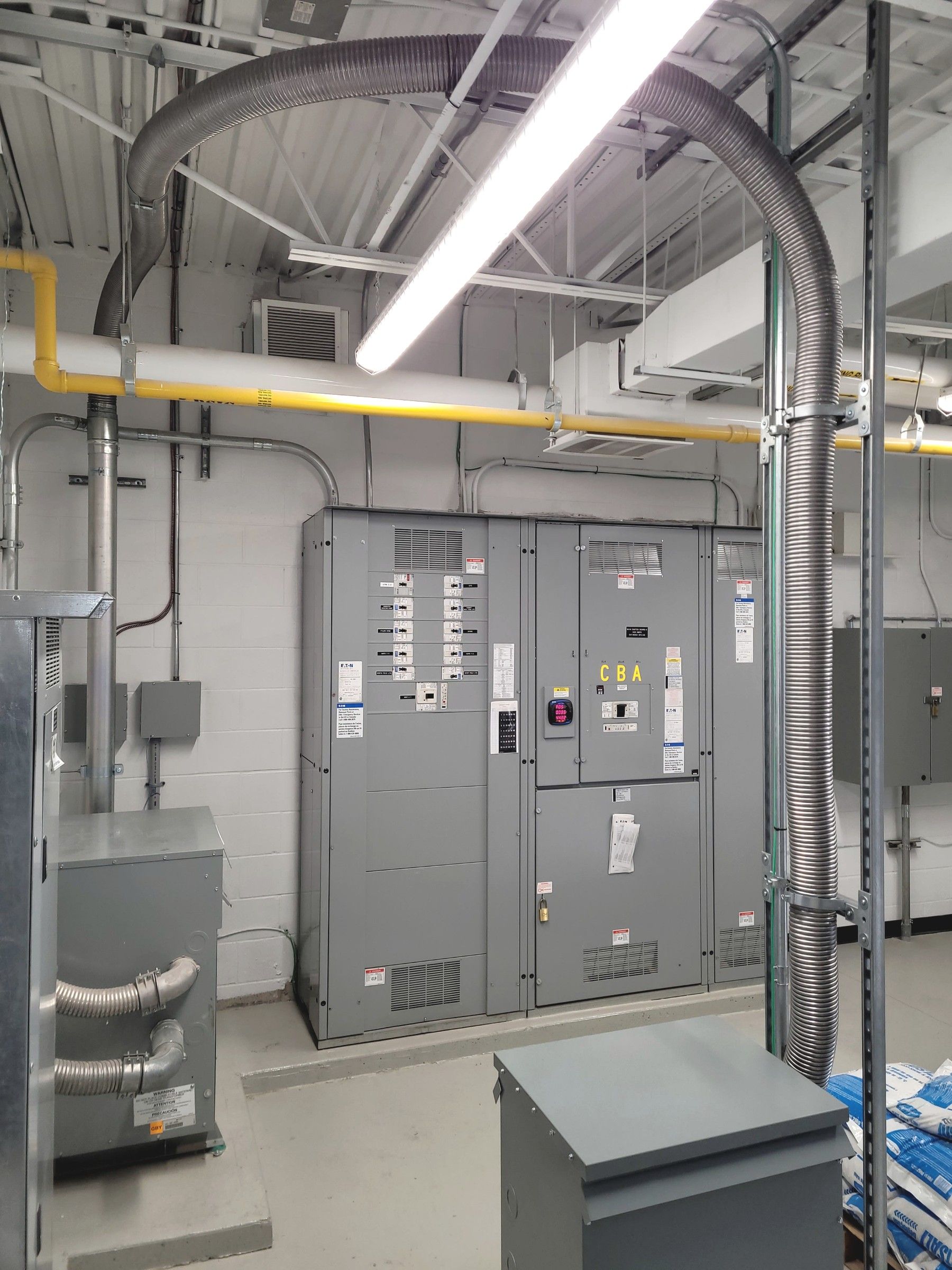
Start with the service you already have
ESA’s guide for multi-residential buildings makes a point that applies to any property: every building has its own electrical setup and demands, and any plan to add chargers has to account for the whole system. In practice:
- Get the load history. ESA says your utility can provide the building’s historical load data (one year of peak usage), which shows how much charging it can handle and whether you need a service upgrade. For buildings other than homes, ESA’s Bulletin 8-3-16 lets a qualified person, including a licensed electrical contractor, use the facility’s demonstrated load in the calculation.
- Count chargers at full value unless they are managed. Without an energy management system, ESA’s Bulletin 86-1-7 says charger loads are added at 100% demand for buildings such as apartment buildings, schools, hospitals and hotels.
- Plan for later. ESA notes that the number of EV drivers in a building may triple or quadruple in five or ten years. Plan for that capacity, even if you install less now.
- Mind the distance. ESA notes that chargers far from the distribution point may need additional panels.
If the service is close to its limit, you can upgrade it (our panel upgrade guide covers the residential version) or manage the load.
Level 2 or DC fast charging?
Natural Resources Canada (NRCan) divides chargers into AC (Levels 1 and 2) and DC (Level 3 fast chargers), which deliver electricity much faster.
- Level 2 runs at 208/240 V. GrandBridge Energy, the utility in Cambridge, describes it as a practical solution for residential and workplace settings.
- Level 3 (DC fast) uses a 480 V input. ESA says Level 3 stations are designed for commercial use, and GrandBridge notes they are the quickest option but not every EV model is compatible with them.
Match the charger to how long cars stay parked: workplaces, condos and overnight fleet parking usually suit Level 2, while DC fast charging fits quick stops. It is also a much larger load: GrandBridge describes its high power demand as requiring significant infrastructure upgrades.
Sharing power between chargers
When capacity is limited, an energy management system (EMS) lets more chargers share it. ESA describes an EMS as a system that manages the charging of multiple EVs at once, balancing their needs against the available capacity and each vehicle’s charge level. ESA’s Bulletin 86-1-7 permits an EMS in any type of building: the chargers’ demand is then limited to the maximum the EMS allows, and where the EMS monitors the service and controls the chargers, their load does not have to be counted at all.
Some chargers can communicate with each other to share the load. ESA’s bulletin addresses this directly: a charger only counts as an EMS if it has features that let it function as one, so we confirm a product’s capabilities before relying on it in the calculation.
Networked chargers and billing
ESA notes that app and software based chargers can connect over Ethernet, Bluetooth or Wi-Fi, letting you control charging times and maximum current. Confirm how they will connect on site before choosing hardware, especially in underground parking.
For billing, ESA’s guide lists three models to consider: sharing the cost among owners or tenants, individual metering (which has its own installation requirements) and point-of-sale payment, where the driver pays by credit card. Settle the billing model early, because it affects which chargers and metering you install.
Outdoor, accessible and protected
- Weather: ESA says to make sure outdoor chargers are rated for outdoor use. Check the operating temperature range against an Ontario winter too.
- Vehicle damage: ESA’s Bulletin 86-1-7 treats chargers and pedestals in parking areas as typically exposed to mechanical damage, so protection is required. Accepted approaches include keeping the charger at least 1 m from vehicles (on a raised curb, or behind secured curb stops that don’t interfere with snow removal), mounting it so the bottom of the unit and its wiring are 1 m above grade, or installing bollards. For fleets, ESA notes that delivery trucks and other large vehicles may need more than 1 m.
- Accessibility: plan some spaces with room for drivers who use mobility devices and controls within easy reach. Your designer and municipality can confirm which accessibility requirements apply.
Permits, plan review and the utility
ESA says every EV charger installation needs a permit (notification of work) filed before work starts, and in Ontario only a Licensed Electrical Contractor can be hired to do electrical work on your property. Larger projects add two steps:
- ESA plan review. ESA’s Bulletin 2-11-29 (issued October 2026) requires ESA to examine plans before work starts when, for anything other than a single dwelling unit, the total nameplate rating of all EV chargers (existing and new) is more than 20% of the service equipment rating. In ESA’s example, five 32 A chargers on a 1,000 A single-phase service (16%) don’t need plan review, while eleven (35%) do.
- The utility. The same bulletin says to consult the supply authority about its conditions of service before planning. In Cambridge, GrandBridge Energy asks vendors installing multiple Level 2 or Level 3 chargers at a location to submit a Request Service Layout form before starting any work.
Condos: the board’s role
In a condo, start with your board or property manager. Ontario’s rules for owner requests are in O. Reg. 48/01 under the Condominium Act, 1998:
- The owner delivers a written application to the corporation, with drawings, specifications or information about the proposed installation and its location.
- The board must respond in writing within 60 days, or another period agreed in writing.
- The board can reject the application only if a report or opinion from a qualified professional clearly states the installation would contravene the law (including the Electrical Safety Code), harm structural integrity, or pose a serious risk to safety or property. It can require a different manner or location if that doesn’t cause the owner unreasonable extra cost.
- If it goes ahead, the owner and corporation sign a written agreement covering costs, maintenance, insurance and ownership, which the corporation registers on title. Unless they agree otherwise, the owner pays the installation costs.
The regulation also sets out a notice process for the corporation to install chargers itself. ESA’s checklist adds practical questions for boards: shared or reserved parking, indoors or outdoors, how many residents drive EVs, and who pays for the electricity. For rental buildings and leased space, talk to the building owner before you plan anything.
Planning your project
Whether it’s a plaza in Cambridge, an office in Waterloo or a condo building in Guelph, we can review your service, work out how many chargers it can support and take care of the ESA permit. See our commercial services or contact us for a free quote. For a single charger at home, see our Level 2 home charger guide.
Sources
- ESA: Guide to EV Charger Installation for Multi-Residential Buildings (PDF)
- ESA: Checklist for EV Charger Installation in Multi-Residential Buildings (PDF)
- ESA: Electric Vehicles & Charging Systems
- ESA: Ontario Electrical Safety Code Bulletin 86-1-7, Electric vehicle charging systems (PDF)
- ESA: Ontario Electrical Safety Code Bulletin 2-11-29, Plans and specifications (PDF)
- ESA: Ontario Electrical Safety Code Bulletin 8-3-16, Maximum circuit loading and demand factors (PDF)
- Natural Resources Canada: Electric vehicle charging
- GrandBridge Energy: Electric Vehicles
- Ontario e-Laws: O. Reg. 48/01 (General) under the Condominium Act, 1998
General information for Ontario, current when published. Electrical work in Ontario must meet the Ontario Electrical Safety Code; talk to a licensed electrical contractor about your situation.